
Over 16,535,656 people are on fubar.
What are you waiting for?
 HedgeCraft is a spiritual path and is a form of Traditional Witchcraft. It is most commonly practiced by modern Pagans. Hedgecraft is based on the village wisewoman of European folklore. It has similarities to the traditional cunning folk of England.
Hedgewitches often practice herbalism, magick, wildcrafting, and many different forms of healing. The use of shamanic techniques is a part of this tradition. Such techniques as the use of trance inducing plants, drumming, dance, chanting and meditation. Hedgewitches are generally unconcerned with overly formal magical workings, preferring more simple folk magic. This is a heavily nature oriented tradition, as such, most Hedgewitches live outside of urban areas. In ancient times, the local Hedgewitch or wisewoman typically lived just on the outside of the town's boundary hedge, part of the community but also an outsider.
Most Hedgewitches practice is solitary and private, based out of the home. Although Hedgewitches can still be active in their local Pagan community.
The term Hedgewitch is a source of controversy due to its idiosyncratic nature. By looking at the word "hedgewitch," we can learn that it comes from the Saxon word for witch, haegtessa, which translates to "hedge-rider". The Old Norse lay Havamal refers to "hedge-riders, witching aloft". Other names for hedge-riders are myrk-rider, Wyrd-rider, and Gandreidh (wand-rider).
In 1992, the modern pagan author Rae Beth released a book entitled Hedge Witch: A Guide to Solitary Witchcraft, an attempt at redefining the term for the modern era. Rae Beth proposes that "The work of the hedge witch is to take the insights of the wildwood mystic and apply them in the service of life, through spells that help and heal the land, other people or creatures, or our own selves," and that the Hedgewitch is a solitary individual. The inspiration for the term as employed by Rae Beth seems to have been the idea of a solitary and individualistic practitioner, paralleling the old term 'hedge-preacher' for an itinerant preacher with no fixed living. However, the definition and practice of Hedgecraft as outlined by Rae Beth is controversial as it is very obviously Wicca based.
In physical terms, the hedge separated the town from the wilderness. Crossing the hedge was considered dangerous, due to the fact that the forest was regarded as a locus of uncanny happenings, including witchcraft. To the hedgewitch and witches alike, the hedge was not thought to be a physical boundary, but a mental barrier to be crossed in trance work. It is the line drawn between this world and the next; between reality and dream. Shamanic practice is common, and is considered a hallmark of a Hedgewitch. From this perspective, if the hedge is the border between a village and the wilderness, the Hedgewitch walks the border with a foot in both worlds. The act of Shamanic Journey, Astral Travel, Soul Flight (and such) is often referred to as "Walking the Hedge, "Crossing the Hedge" or "Riding the Hedge" by Hedgewitches.
All the stories you hear of witches flying off on brooms "to the sabbat" or to Venusberg Mountain are, according to the book, true--to a point. The Hedgewitch supposedly would anoint her besom (broom), pitchfork, goat, distaff, or bread paddle, place it between her legs so that the ointment could enter her body, and "off" she went.[citation needed] Though in modern times such practices are rare and have changed considerably.
Outside of the academic world this specific sense of the term with its medieval connotation of magical liminality and boundaries between the worlds was primarily promoted via Nigel Jackson's 1994 book 'Call of the Horned Piper' and has since exercised a pervasive influence in the contemporary witchcraft milieu, investing the term 'hedge-witch' with a more archaic resonance and meaning in magical practice.
Spirituality in Hedgewitches varies from almost none to Wiccan to Abrahamic, but is almost always neopagan.
HedgeCraft is a spiritual path and is a form of Traditional Witchcraft. It is most commonly practiced by modern Pagans. Hedgecraft is based on the village wisewoman of European folklore. It has similarities to the traditional cunning folk of England.
Hedgewitches often practice herbalism, magick, wildcrafting, and many different forms of healing. The use of shamanic techniques is a part of this tradition. Such techniques as the use of trance inducing plants, drumming, dance, chanting and meditation. Hedgewitches are generally unconcerned with overly formal magical workings, preferring more simple folk magic. This is a heavily nature oriented tradition, as such, most Hedgewitches live outside of urban areas. In ancient times, the local Hedgewitch or wisewoman typically lived just on the outside of the town's boundary hedge, part of the community but also an outsider.
Most Hedgewitches practice is solitary and private, based out of the home. Although Hedgewitches can still be active in their local Pagan community.
The term Hedgewitch is a source of controversy due to its idiosyncratic nature. By looking at the word "hedgewitch," we can learn that it comes from the Saxon word for witch, haegtessa, which translates to "hedge-rider". The Old Norse lay Havamal refers to "hedge-riders, witching aloft". Other names for hedge-riders are myrk-rider, Wyrd-rider, and Gandreidh (wand-rider).
In 1992, the modern pagan author Rae Beth released a book entitled Hedge Witch: A Guide to Solitary Witchcraft, an attempt at redefining the term for the modern era. Rae Beth proposes that "The work of the hedge witch is to take the insights of the wildwood mystic and apply them in the service of life, through spells that help and heal the land, other people or creatures, or our own selves," and that the Hedgewitch is a solitary individual. The inspiration for the term as employed by Rae Beth seems to have been the idea of a solitary and individualistic practitioner, paralleling the old term 'hedge-preacher' for an itinerant preacher with no fixed living. However, the definition and practice of Hedgecraft as outlined by Rae Beth is controversial as it is very obviously Wicca based.
In physical terms, the hedge separated the town from the wilderness. Crossing the hedge was considered dangerous, due to the fact that the forest was regarded as a locus of uncanny happenings, including witchcraft. To the hedgewitch and witches alike, the hedge was not thought to be a physical boundary, but a mental barrier to be crossed in trance work. It is the line drawn between this world and the next; between reality and dream. Shamanic practice is common, and is considered a hallmark of a Hedgewitch. From this perspective, if the hedge is the border between a village and the wilderness, the Hedgewitch walks the border with a foot in both worlds. The act of Shamanic Journey, Astral Travel, Soul Flight (and such) is often referred to as "Walking the Hedge, "Crossing the Hedge" or "Riding the Hedge" by Hedgewitches.
All the stories you hear of witches flying off on brooms "to the sabbat" or to Venusberg Mountain are, according to the book, true--to a point. The Hedgewitch supposedly would anoint her besom (broom), pitchfork, goat, distaff, or bread paddle, place it between her legs so that the ointment could enter her body, and "off" she went.[citation needed] Though in modern times such practices are rare and have changed considerably.
Outside of the academic world this specific sense of the term with its medieval connotation of magical liminality and boundaries between the worlds was primarily promoted via Nigel Jackson's 1994 book 'Call of the Horned Piper' and has since exercised a pervasive influence in the contemporary witchcraft milieu, investing the term 'hedge-witch' with a more archaic resonance and meaning in magical practice.
Spirituality in Hedgewitches varies from almost none to Wiccan to Abrahamic, but is almost always neopagan.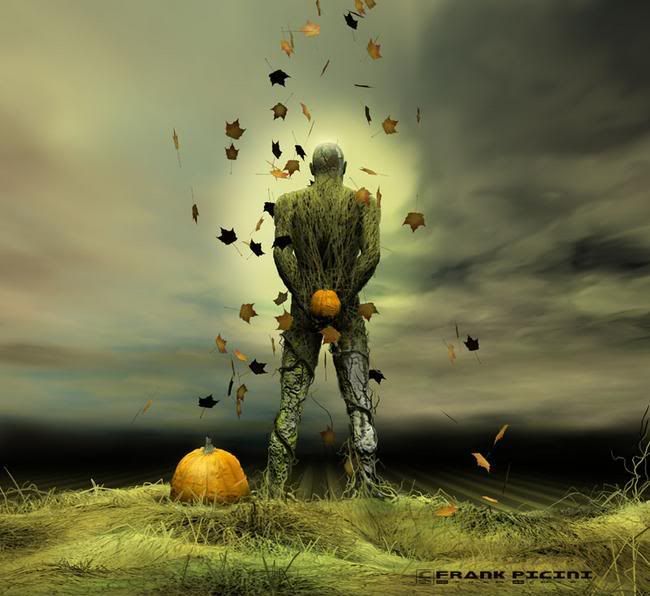 Tales of the wicker man come out of a persistent (but arguably false) legend of the ancient Druids. The tale, recounted in Julius Caesar's Gallic wars, recounts a sensationalistic story of human sacrifices made by herding victims into a large man-shaped wicker cages and then burning them:
"Others have effigies of great size interwoven with twigs, the limbs of which are filled up with living people which are set on fire from below, and the people are deprived of life surrounded by flames. It is judged that the punishment of those who participated in theft or brigandage or other crimes are more pleasing to the immortal gods; but when the supplies of this kind fail, they even go so low as to inflict punishment on the innocent "
There are no other contemporary accounts (other than those who drew on Caesar's writings) of this practice, and no archaeological evidence to support the accusation, yet this story is the basis for most of the tales about Druids as bloodthirsty practitioners of human sacrifice.
The truth in the tale is probably related to the ancient harvest custom, still carried out in parts of Europe, of ritually sacrificing the "corn god" to ensure the following year's harvest. A small portion of the grain was left in the field, often twisted or tied into a man-like shape, often called a 'corn dolly.' This effigy (immortalized in Burns' ballad of John Barleycorn) was believed to contain the essence of the spirit of the grains- a representation of the solar deity who would be burned and 'reborn' as the spring grain.
Today's wicker man is largely a Neopagan custom that bears only passing relation to his ancient forebear. A fixture at harvest festivals and Beltane gatherings, he often represents the passing of the old year and its cares and worries.
Tales of the wicker man come out of a persistent (but arguably false) legend of the ancient Druids. The tale, recounted in Julius Caesar's Gallic wars, recounts a sensationalistic story of human sacrifices made by herding victims into a large man-shaped wicker cages and then burning them:
"Others have effigies of great size interwoven with twigs, the limbs of which are filled up with living people which are set on fire from below, and the people are deprived of life surrounded by flames. It is judged that the punishment of those who participated in theft or brigandage or other crimes are more pleasing to the immortal gods; but when the supplies of this kind fail, they even go so low as to inflict punishment on the innocent "
There are no other contemporary accounts (other than those who drew on Caesar's writings) of this practice, and no archaeological evidence to support the accusation, yet this story is the basis for most of the tales about Druids as bloodthirsty practitioners of human sacrifice.
The truth in the tale is probably related to the ancient harvest custom, still carried out in parts of Europe, of ritually sacrificing the "corn god" to ensure the following year's harvest. A small portion of the grain was left in the field, often twisted or tied into a man-like shape, often called a 'corn dolly.' This effigy (immortalized in Burns' ballad of John Barleycorn) was believed to contain the essence of the spirit of the grains- a representation of the solar deity who would be burned and 'reborn' as the spring grain.
Today's wicker man is largely a Neopagan custom that bears only passing relation to his ancient forebear. A fixture at harvest festivals and Beltane gatherings, he often represents the passing of the old year and its cares and worries.  "A man's dying is more the survivors' affair than his own." --Thomas Mann
What I'm going to propose here are some ideas for last rites--as with most of the other rites in this turn of the personal wheel, what happens at this time is going to rely on several factors, one being the person's own wishes (and we can hope that the person took the survivors, and not just themselves, into account when they considered how they wanted to be remembered in that final rite), the wishes/will of the family, and the traditions of those doing the rite.
The Family:
The most difficult problem that pagan folk run into when one of their members dies is that responsibility for their last rites goes to the next of kin. It is a painful reality that devout pagans often end up being buried in a Christian (or other religious) service, because the family is the one legally entitled to bury them. Their pagan friends have no such rights.
So! If you are a pagan, and you have certain wishes as to your last rites, it's time to arrange things legally, so that those who will respect your wishes will be in charge. Otherwise, your family is going to claim you and bury you as they want you buried, not as you or any of your pagan family know you would want to be buried.
Decorations:
White candles, white altar, flowers (white is the color of death and mourning in many countries; but in this case, it is also a reminder of rebirth; in this rite, we're going to focus on that).
Needed:
A picture of the loved one.
A vase of flowers, enough for all.
A pitcher of water and a basin, to be set up just outside the circle for ritual "hand-washing."
The Ashes for burial if this is a burial rite as well.
Drums/musical instruments.
Other Ideas:
One thought is to have a cauldron filled with earth, and a bowl filled with seeds. Have each person plant a seed in the cauldron.
Cleansing:
Each person, using the urn of water, should rinse their hands just before entering the circle. This unifies the mourners and it emphasizes the quiet, special feel of the ritual.
Cast the Circle:
You might want to use callings for the quarters created/used by the loved one, and call upon his/her favored deities, as well as the God and Goddess.
Purpose:
HP/S states that all are here "to remember ________name, born_________, died____________. He/She has gone on to Summerland and now awaits rebirth."
Ritual:
Starting with a meditation or a song is always good at such times. Meditations on one's own personal death, or on a last communication with the loved one, or on a remembrance of past lives would be good. You might have slow drumming or soft music. I would then pass round the photo, have each person look at it, hold it before them so that it is facing the rest of the group, and relate a favored anecdote about the person.
This can also be done with a bottle of booze if you wish to make it more of a wake, or with a special talisman of the person.
If this is a burial as well, then all should head out to the area where the ashes are to be scattered (or the body buried) and there should be a rite at this point, as well. People may wish to bury with the person certain items--a wand or, if the loved one was a tarot reader, a deck of cards. People may wish to say good-bye.
The HP/S should have a final word before the circle is opened. With everyone holding hands, she should speak to/of the Goddess, of the turning of the Wheel, of rebirth, of this person now gone, and how we will all meet them again to enjoy, once again, their many wonderful qualities.
The HP/S should add that, in the loved one's place, she offers everyone a flower to take home as a farewell gift. She should then open the circle. Hugs should be exchanged.
"A man's dying is more the survivors' affair than his own." --Thomas Mann
What I'm going to propose here are some ideas for last rites--as with most of the other rites in this turn of the personal wheel, what happens at this time is going to rely on several factors, one being the person's own wishes (and we can hope that the person took the survivors, and not just themselves, into account when they considered how they wanted to be remembered in that final rite), the wishes/will of the family, and the traditions of those doing the rite.
The Family:
The most difficult problem that pagan folk run into when one of their members dies is that responsibility for their last rites goes to the next of kin. It is a painful reality that devout pagans often end up being buried in a Christian (or other religious) service, because the family is the one legally entitled to bury them. Their pagan friends have no such rights.
So! If you are a pagan, and you have certain wishes as to your last rites, it's time to arrange things legally, so that those who will respect your wishes will be in charge. Otherwise, your family is going to claim you and bury you as they want you buried, not as you or any of your pagan family know you would want to be buried.
Decorations:
White candles, white altar, flowers (white is the color of death and mourning in many countries; but in this case, it is also a reminder of rebirth; in this rite, we're going to focus on that).
Needed:
A picture of the loved one.
A vase of flowers, enough for all.
A pitcher of water and a basin, to be set up just outside the circle for ritual "hand-washing."
The Ashes for burial if this is a burial rite as well.
Drums/musical instruments.
Other Ideas:
One thought is to have a cauldron filled with earth, and a bowl filled with seeds. Have each person plant a seed in the cauldron.
Cleansing:
Each person, using the urn of water, should rinse their hands just before entering the circle. This unifies the mourners and it emphasizes the quiet, special feel of the ritual.
Cast the Circle:
You might want to use callings for the quarters created/used by the loved one, and call upon his/her favored deities, as well as the God and Goddess.
Purpose:
HP/S states that all are here "to remember ________name, born_________, died____________. He/She has gone on to Summerland and now awaits rebirth."
Ritual:
Starting with a meditation or a song is always good at such times. Meditations on one's own personal death, or on a last communication with the loved one, or on a remembrance of past lives would be good. You might have slow drumming or soft music. I would then pass round the photo, have each person look at it, hold it before them so that it is facing the rest of the group, and relate a favored anecdote about the person.
This can also be done with a bottle of booze if you wish to make it more of a wake, or with a special talisman of the person.
If this is a burial as well, then all should head out to the area where the ashes are to be scattered (or the body buried) and there should be a rite at this point, as well. People may wish to bury with the person certain items--a wand or, if the loved one was a tarot reader, a deck of cards. People may wish to say good-bye.
The HP/S should have a final word before the circle is opened. With everyone holding hands, she should speak to/of the Goddess, of the turning of the Wheel, of rebirth, of this person now gone, and how we will all meet them again to enjoy, once again, their many wonderful qualities.
The HP/S should add that, in the loved one's place, she offers everyone a flower to take home as a farewell gift. She should then open the circle. Hugs should be exchanged. Powers of the Ancient Ways,
In this place far from my home and my family,
I honor you and call upon you.
Powers of Earth,
Strengthen my physical body and the bodies of my peers and commanders.
Powers of Air,
Keep me vigilant at my post,
My mind clear and sharp.
Powers of Fire,
Give me courage,
Even when my duty is hard or bitter.
Powers of Water,
Grant me restful slumber and good dreams after a long duty day.
Powers of Spirit,
Balance me in honor, nobility, and spiritual purpose.
Powers of Goddess & God & Their Unity,
Be with me & around me, bless me & protect me as I carry out my mission.
So Mote It Be.
Powers of the Ancient Ways,
In this place far from my home and my family,
I honor you and call upon you.
Powers of Earth,
Strengthen my physical body and the bodies of my peers and commanders.
Powers of Air,
Keep me vigilant at my post,
My mind clear and sharp.
Powers of Fire,
Give me courage,
Even when my duty is hard or bitter.
Powers of Water,
Grant me restful slumber and good dreams after a long duty day.
Powers of Spirit,
Balance me in honor, nobility, and spiritual purpose.
Powers of Goddess & God & Their Unity,
Be with me & around me, bless me & protect me as I carry out my mission.
So Mote It Be.


